1/16/2026
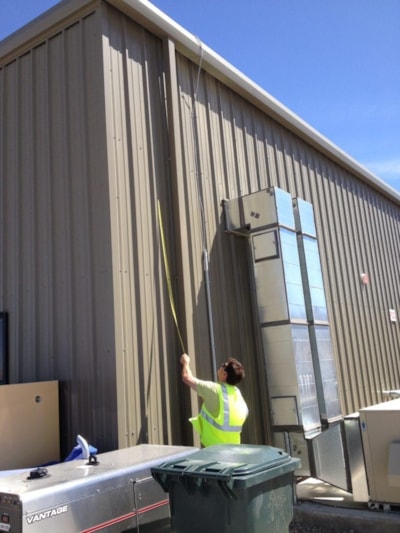
When managing signage across dozens, or hundreds, of locations, consistency, safety, and execution speed matter just as much as brand visibility. Yet one of the most common reasons for signage projects stalls, exceeded budget, or require rework is an incomplete or informal understanding of the installation environment.
This is where a professional site survey becomes essential.
A well-executed sign installation site survey provides the foundation for predictable timelines, accurate fabrication, safe installation, and seamless coordination across stakeholders. For large organizations planning exterior sign installation or interior sign installation, site surveys are not a formality; they are a risk-mitigation strategy.
This article explains what a site survey is, why it matters at scale, what data should be collected, and how experienced installation partners like True Install support complex rollouts through disciplined site surveys and on-site coordination processes.
A site survey is a structured, on-location assessment conducted before fabrication or installation begins. Its purpose is to document real-world conditions that affect how, when, and where signage can be installed.
Physical mounting surfaces (wall types, structural conditions)
Electrical access and requirements
Installation height, reach, and access constraints
Interior and exterior clearances
Existing signage removal needs
Site safety considerations
Accuracy of drawings versus actual conditions
While design renderings and architectural plans are valuable, they rarely reflect field conditions with complete accuracy. This is especially true with older buildings, leased properties, or locations with prior tenant modifications.
Industry data consistently shows that field validation reduces rework, change orders, and project delays, particularly in multi-site rollouts where small errors are multiplied across locations.
Large businesses face a different level of complexity than single-location operators. A missing data point at one site may be manageable, but multiplied across 50, 200, or 1,000 locations; those issues become costly.
Without a professional site survey, organizations often encounter:
Fabricated signs that do not fit actual wall conditions
Electrical access that differs from drawings
Lift or equipment requirements discovered too late
Installation delays due to access or safety issues
Inconsistent execution across regions
According to construction and facilities management studies, rework can account for up to 5-15% of total project cost when field conditions are not validated early. For signage programs operating at scale, that risk compounds quickly.
Maintain brand consistency
Reduce installation change orders
Improve rollout timelines
Increase installer safety and compliance
Create accurate scopes for national execution
Exterior sign installation introduces variables that are rarely visible from plans alone.
A proper exterior site survey evaluates:
Wall construction (concrete, masonry, EIFS, metal panel, etc.)
Mounting limitations and structural considerations
Sign height and reach requirements
Ground conditions for lift placement
Power availability and routing
Clearance from landscaping, awnings, and adjacent tenants
For multi-tenant or urban locations, access constraints can significantly impact installation logistics. Documenting these conditions early allows for realistic scheduling, equipment planning, and cost forecasting.
Site surveys also play a role in identifying where electrical permits or sign applications may be required by local authorities. While these regulatory items fall outside of True Install’s service scope, knowing they exist early helps clients plan timelines appropriately.
Interior sign installation may appear simpler, but it carries its own risks. These risks are amplified in occupied spaces.
Interior site surveys typically assess:
Wall composition behind finished surfaces
Ceiling heights and obstructions
Electrical tie-in locations
Traffic flow and business-hour constraints
ADA-related placement considerations
Existing fixtures or branding to be removed or protected
For corporate offices, healthcare environments, retail spaces, and manufacturing facilities, interior installations must often be coordinated around active operations. A detailed site survey ensures installations are executed efficiently, safely, and with minimal disruption.
It’s important to distinguish between site surveys and permitting activities.
A professional site survey identifies conditions that may trigger regulatory requirements such as:
Electrical permits
Local sign applications
Property or landlord approvals
However, permit acquisition and management are outside the scope of True Install’s services.
True Install’s role is to document field conditions accurately so clients, landlords, and permitting authorities have the information needed to move forward without surprises. This clarity helps prevent downstream delays, even when permitting is managed by other parties.
Not all site surveys deliver the same value. For enterprise-level projects, consistency and documentation of quality matter.
A comprehensive sign installation site survey should include:
Verified measurements and mounting locations
Photographic documentation of walls, power sources, and access
Notes on installation challenges or constraints
Electrical observations (without performing electrical work)
Safety and equipment considerations
Clear, standardized reporting formats
This information becomes the single source of truth used by fabricators, project managers, installers, and facilities teams.
True Install specializes in installation project management and on-site coordination for signage, fixtures, and branded environments across North America.
Our site survey capabilities are designed for large, distributed programs that require accuracy, speed, and consistency.
Standardized survey processes to ensure consistent data across locations
Nationwide field resources capable of supporting regional and national rollouts
Detailed documentation aligned with fabrication and installation needs
Centralized project coordination to support multi-vendor environments
Clear communication between stakeholders before installation begins
Whether supporting a phased rebrand, a new-store rollout, or a national refresh, our team helps organizations move from planning to execution with fewer surprises.
Many large branding initiatives extend beyond signs alone.
True Install also supports:
Fixture installation
Branded environment rollouts
POP and display installations
On-site vendor coordination
Multi-location deployment scheduling
By combining site survey insights with experienced project management, organizations gain better control over timelines, budgets, and execution quality.
For large businesses, signage is not just a marketing asset, it’s an operational one. Missed deadlines, inconsistent installs, or safety issues affect customer perception and internal teams alike.
A disciplined site survey process helps organizations
Protect brand standards
Reduce downstream costs
Improve installer efficiency
Create predictable rollout schedules
In an environment where speed-to-market and consistency matter, site surveys are not optional, they are foundational.
If your organization is planning an upcoming signage or fixture rollout and needs reliable field data to support execution, learn more about True Install’s site survey services.