6/25/2026
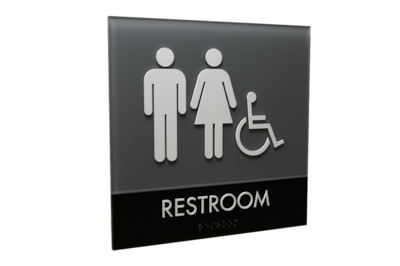
Organizations that manage ADA signage regularly already understand what success looks like. Signs need to be installed consistently, predictably and in a way that supports accessibility requirements and ADA compliance without slowing the project down.
As projects grow in size or complexity, the question often becomes less about whether ADA signage can be installed internally and more about whether it should be. Many teams find that outsourcing Professional ADA installation to companies like True Install allows them to maintain quality standards while protecting schedules, budgets and internal bandwidth.
Outsourcing is not a reaction to difficulty. It is a strategic choice made by teams that value repeatable execution and want ADA signage installation to feel controlled instead of reactive.
ADA signage installation tends to sit at the intersection of multiple constraints. Finished environments, compressed timelines, coordination with other trades and inspection readiness all converge at the same moment.
For organizations managing multiple locations or phased projects, consistency becomes just as important as correctness. Outsourcing ADA installation introduces a standardized process that produces the same result across spaces, regardless of geography or timing.
Instead of relying on ad hoc decisions in the field, True Install teams work from defined steps, documented expectations and verification checkpoints that keep outcomes aligned.
At this level, most teams already have plans, sign schedules and fabrication details in place. The purpose of a site survey is not to revisit design decisions, but to align those documents with real world conditions.
A site survey focuses on measurements, access constraints, wall conditions and coordination considerations that influence how signs will actually be installed. By making site surveys a required first step, True Install helps eliminate assumptions before crews arrive on site.
This early alignment reduces mid-install adjustments and keeps ADA signage installation moving smoothly within the broader project schedule.
Permit coordination is less about approvals and more about readiness. Identifying potential permit requirements early allows installation schedules to be built with fewer unknowns.
Many True Install teams handle permit coordination by gathering documentation, submitting applications where required and tracking progress alongside the installation timeline. While this does not guarantee outcomes, it helps prevent signage installation from becoming an unexpected delay late in the project.
ADA compliance and UL considerations are already part of most project conversations. The value of subcontracting lies in keeping those expectations consistent from planning through installation.
Compliance coordination supports crews by clarifying requirements, reviewing documentation, and aligning interpretation across teams. This is especially important for ADA fixture installation and ADA display installation, where multiple sign types must function together as a unified system.
The result is fewer inconsistencies and a more cohesive finished environment.
On-site execution benefits from specialization. Professional ADA installation relies on trained crews, installation checklists and verification steps that reduce variability in the field.
This disciplined approach supports accurate mounting, consistent placements and reliable sequencing, even in occupied or time-restricted environments. For organizations that value predictability, outsourcing installation helps ensure ADA signage is completed cleanly and confidently.
Post installation QA provides a final review of placement, consistency, and alignment with project documentation. It creates confidence that ADA signage installation meets expectations before inspections or occupancy.
Hiring an external team for this step ensures quality assurance happens even when internal teams are focused on close-out activities. It also provides documentation that can be referenced later if spaces are modified or expanded.
Teams that use ADA signage installation are not stepping away from responsibility. They are demonstrating clarity about where specialized execution adds value.
By standardizing site surveys, permit coordination, compliance support, installation and post installation QA, organizations gain predictability and protect momentum across projects.
If ADA signage is part of your next project, starting with a site survey is the most effective way to set expectations and reduce friction. It establishes alignment early and supports a controlled installation process from start to finish.
Outsourcing ADA installation is not about solving problems. It is about maintaining a high standard as projects scale.